

Ontario Construction News staff writer
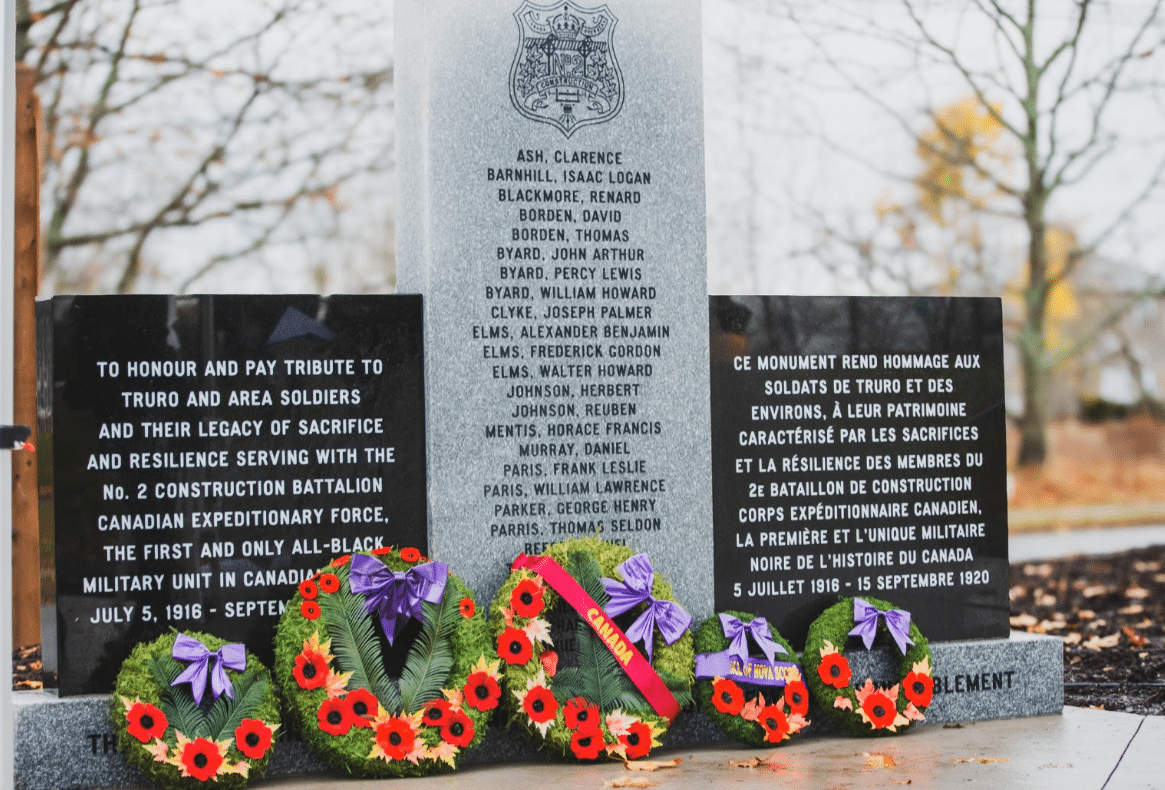
As Canadians gather at cenotaphs and memorials across the country on Nov. 11 to honour those who served and sacrificed for Canada, the legacy of the No. 2 Construction Battalion is also being recognized as the country marks 110 years since the formation of the First World War’s all-Black military unit.
Formed on July 5, 1916, in Pictou, N.S., the No. 2 Construction Battalion was established as a segregated, non-combatant unit at a time when Black Canadians faced widespread discrimination and barriers to military service.
In a statement issued in June to mark the Battalion’s 110th anniversary, Veterans Affairs Minister Jill McKnight and Defence Minister David J. McGuinty recognized the contributions of the men who served with the unit, describing their story as one of courage and determination in the face of prejudice and exclusion.
Despite the discrimination, approximately 800 Black men from Canada, the United States and the British West Indies were associated with the Battalion during the First World War, supporting Canada’s war effort, the ministers said.
The Battalion’s members carried out their duties with professionalism and dedication, even as they faced barriers that prevented them from serving alongside other Canadian soldiers, according to the statement.
The ministers said the unit’s legacy is reflected in today’s integrated and diverse Canadian Armed Forces, adding that its members demonstrated values of professionalism, duty and dedication to Canada.
“On this anniversary, we honour the bravery, resilience, and patriotism of the Black Canadians of No. 2 Construction Battalion,” the ministers said. “We remember their sacrifice, celebrate their legacy, and recommit ourselves to carrying forward the values they embodied in service to Canada.”
The Battalion’s members initially worked in Canada, removing rails from railway sidings in New Brunswick for shipment to France. Overseas, they served with the Canadian Forestry Corps, cutting timber, building and maintaining roads, and producing lumber used to construct and reinforce trenches on the Western Front.
Among its members was Sergeant-Major Ethelbert Lionel Cross, who left his law studies at age 27 to enlist. He later became Toronto’s first Black lawyer to establish a private practice.
Despite their contributions to the war effort, Battalion members faced systemic racism and exclusion throughout their service. The unit was officially disbanded on Sept. 15, 1920.
In Toronto, a Heritage Toronto plaque unveiled in 2024 honours the Battalion at the corner of King Street West and University Avenue, near the site of its original enlistment office at 162 King St. W. Installed outside St. Andrew’s Presbyterian Church at 200 King St. W., the plaque was made possible with support from Veterans Affairs Canada.
In July 2022, the Government of Canada issued an official apology for the racism and discrimination members of the Battalion experienced while serving their country.
As Canadians remember those who served in conflicts throughout the nation’s history this Remembrance Day, the story of the No. 2 Construction Battalion is a reminder of the contributions of Black Canadians who answered the call to serve despite facing discrimination at home.
